MEP MED Madrid 2025
4th April 2025 - 8th April 2025
Welcome to the 6th EuroMediterranean Session – Madrid 2025!
From April 4th to 8th, 2025, Madrid will host young delegates from across Europe for a unique experience of debate, diplomacy, and cultural exchange. The Model European Parliament provides a platform for future leaders to discuss key regional challenges, collaborate on policy solutions, and shape the dialogue on Europe’s future. Set in Spain’s vibrant capital, this session promises insightful discussions, meaningful connections, and an unforgettable journey in the heart of democracy. Stay tuned and get ready to make an impact!
Delegation Profiles
Cyprus is a small island located in the Mediterranean Sea. Although it has faced conflicts in the past, today Cyprus strongly supports peace, equality, and working together with other countries. In this committee, Cyprus wants to play a positive role and support solutions that help people live in safety and freedom. In MEP they are known for being very tense and focused.
Cyprus believes in the power of international law and the importance of the EU in solving world problems. The delegates of Cyprus is interested in promoting peace in conflict areas, helping refugees, and protecting human rights around the world. Cyprus also supports climate action and sustainable development, because it understands how global challenges affect small countries.
I interviewed Anastasia, one delegate of Cyprus. She explained that Cyprus wants to build strong relationships with other nations. She said: “Cyprus knows how it feels to experience conflict, so we want to help create peace for others.” Anastasia also shared that Cyprus supports the idea of open communication, listening to other delegates, and working together to find fair solutions. She believes that every country, no matter how small, has a voice that matters.
Anastasia added that Cyprus is committed to standing up for justice and human dignity. She hopes that during this committee, Cyprus can show leadership by encouraging unity and respect among all countries.
In conclusion, Cyprus is a peaceful and active member of the MEP community. Through its delegates, it shows a strong commitment to cooperation, fairness, and a better future for all.
by Louise Piech
Denmark is known for its biking culture, Lego bricks and long-reigning royal family — but alongside these, the country will also be known for its excellent delegation representing Denmark at the Euro-Mediterranean MEP session. At this conference Denmark will be represented by Annabell Holst (FEMM), Agnes Marcher-Andersen (AFET), Sophia Beyk (LIBE), Thea Grønholt (EMPL) and Vilma Hansson (AFCO). Together, they believe that building trust between member states is a key to approaching and solving issues, and the delegation of Denmark sees its reliability as one of its strengths in this conference.
The delegation from Rysensteen Gymnasium is full of energy to contribute to discussions and gain new experiences. Each delegate has shown their skills during the selection process and has been chosen for a good reason, based on their different skills and knowledges. Although they all come from the same school, they bring diverse perspectives to the table due to their individual interests. These differences create a team that is very open-minded, efficient and proactive.
For them, this conference is a new opportunity to get to know young people from all around Europe. They are participating for the first time in MEP session and are more than ready to debate, challenge their own views and meet new people. “As the Danish delegation, we expect to deepen our understanding of European politics in our respective committees”, says Agnes Marcher-Andersen. They also want to explore ways to enhance collaboration between member states in shaping future EU policy. As a Scandinavian country with a well-functioning government, they believe to bring a valuable point of view to the discussions.
Although they were invited to this session at the very last minute, the delegation has prepared well for the conference with great enthusiasm. For them, time pressure is not a problem —they always put full effort into everything they do and can achieve good results even in a short time. They have also prepared an awesome performance for the Intercultural Night. Let’s see what the Danish delegation has to offer in this session!
by Ellinoora Anttila
When we think of Greece, we often imagine the Greek islands, the food, or the Mediterranean warmth with which they welcome people, and these are also the aspects the Greeks consider as their strengths. They also inform us about the importance of the Greek Gods, which is why Greece is a country so rich in ancient monuments, pioneers in art. On the other hand, they talk about the hospitality this country offers, with a high number of tourists, specifically 32,000,000 people. Furthermore, they are very proud of being the birthplace of democracy, which has shaped the country into what it is today. Just like any country, they are proud of their people, their food, and their crystal-clear beaches. They also highlight their nightlife, which is very characteristic of the country.
The expectations of this delegation are proving to be true. Personally, they aim to create lasting friendships and have fun, while professionally, they seek to find solutions to the problems raised for a better society. They also aim to “cooperate together, to empower the European Union resolution.”
This is not the most experienced delegation in the MEP, as some of them have not attended any other assembly, but they are still proving to be up to the task, knowing how to debate and adapting to the proposed model.
In the delegation of Greece, we have one vice-president, Artemis Anagnostopolou, who has much experience and wants to teach the delegates. Aikaterina-Christina Avramidi, a CP who belongs to the EMPL commission, and five delegates: Dimitrios Panagiotakis, Aikaterina-Christina Avramidi, Nikolaos Maximos Galatianos, Kalliopi Iliaki, and Ioannis Chasoulidis, who from their point of view, teach us the values of the MEP with the following quote: “A place to make lasting friendships and find solutions to present problems.”
by Raquel Gálvez
Even though the delegation represents a single nation, the delegates come from two different backgrounds: Arcadia Academy and Knightsbridge Schools International Schools Montenegro (KSI). They are in a healthy rivalry as those schools are the only ones which participate in MEP in Montenegro. But they are here to bond together and produce the most effective resolutions possible.
The delegation is composed of highly qualified individuals. Uras Gönenç is the CP of AFET and has attended one previous session, such as Uygar Tekin. Its leadership is confirmed by the past acquaintance of being in student leadership, hosting MUN and speech competitions. The MUN club of Arcadia Academy has a history of 8 years. Hosting such an event and being involved in it proves the quality of its superintendence.
Each member of the committees have specific aims. For example, the delegate in AFCO works to achieve the expansion of the EU in order to have Montenegro included in the Union. The delegate in AFET seeks to create deals which don’t overload Montenegro with too much burden, but still aligns with the EU’s objective and laws. But, at the same time as debating for Montenegro, they hope to gain experiences for public speaking and resolution making for every setting, not only politics.
The hopes are high for the delegation of Montenegro and with the competitive history, the delegates will create remarkable resolutions for themselves and everyone.
by Chaehyeon Kim
Many members of the team have experience with political events. Some took part in the National MEP Session in Austria and other debate programs, like MUN and UN-Model conferences. Their schools also support them through special programs like European Studies and political education classes, where they learn about democracy, negotiation, and public speaking.
The team wants to represent Austria well and help write strong and fair resolutions. “We want to contribute to a successful discussion that most of the assembly can agree on,” says Mohammad Mahdi Jalaeipour. Another delegate, Nazar Naslavskyi, adds, “I want to share my ideas and help find good solutions.”
Even though they hope their resolutions will pass, the group knows that the most important part is learning from others and hearing different opinions. Lilly Grace Morozov explains, “It’s about the journey of exchanging ideas and arguing one’s opinion for what they believe in.”
The Austrian delegation is excited to meet students from all over Europe, learn more about different cultures and viewpoints, and take part in respectful and productive debates. As a team, they are ready to listen, speak up, and work together to make a difference in the MEP program.
by Louise Piech
Euro-Mediterranean MEP session.
They all have participated in last year’s MEP national session or European Youth Parliament (EYP) regional session in Finland. Through their participation in last year’s MEP national session or the EYP regional session, they have gained confidence, sharpened their critical thinking, and developed a deeper understanding of how the EU operates —motivating them to return for this conference.
As a group, they share common values related to environment and equality which they aim to uphold in Madrid as well. One of their strengths as a delegation is that they all come from the same school, meaning they already know each other. The high school they represent is known for its strong foreign language focus and active participation in social engagement activities. Last year, they hosted students from Spain and gained many new insights from the experience.
The delegation is looking forward to this conference full of excitement and eagerness. Their collective goals are to improve their debating and communication skills, build new connections and have fun. For Noomi this is just not about the debate and policy —”I want to make new friends!” she says, capturing the team’s enthusiasm for meeting fellow participants. They are also excited to visit Spain and learn about its culture and history.
As a Nordic delegation, they bring a complementary point of view to discussions on European security and cooperation —especially as Finland is the only country at this MEP that shares a border with Russia. While each delegate will contribute within their own committee, they are eager to exchange ideas, challenge viewpoints, and build lasting connections.
The delegation regards this conference as a good occasion for a young European, as Aino puts it “This is a wonderful opportunity to transcend national borders and foster a new sense of European unity.” This mindset reflects the very spirit of the delegation: eager to collaborate, debate, and bring fresh perspectives to the Mediterranean MEP.
by Ellinoora Anttila
This year, the French team consists of Arman Karapetyan (LIBE), Paloma Devaux (EMPL), Victoria Arminda Lullier (FEMM), Manon Thelisson (AFET) and Malo Bruneau (AFCO). Each of them, from their committee, will contribute their knowledge and skills to enrich the discussion. Together with delegations from other countries, including the Spanish one, they will seek to build consensus and generate proposals that reflect the diversity of perspectives in the session.
For the French delegates, the MEP represents a unique opportunity to develop key skills such as active listening, negotiation and critical thinking. With a focus on learning, adapting and continuously improving, they are committed to creating viable solutions through teamwork and cooperation.
The MEP is not only an academic experience, but a platform for personal growth and intercultural learning. With determination, openness and a desire to leave its mark, the French delegation approaches this session with the certainty that it will be an enriching experience full of learning.
Türkiye has long been engaged with European integration, from the Ankara Agreement in 1963 to its EU candidacy in 1999. Since then, it has become a crucial partner for the EU for handling global issues. Especially migration as it is the bridge for refugees through the Middle East and Europe.
As Turkey is open to various cultures, this delegation is composed of unique individuals. But, they cohere as they are from the same school; MEF International School Istanbul. They are truly passionate about leading the session with their experience and academic background.
The main objective of this delegation is to adapt their diplomacy skills in order to contribute to the actions that can actually change the world, also achieving personal development. Because international students are coming together, they are expected to have a diverse perspective with creativity.
As a group, the delegation consists of skilled participants. Elanur Rose Ozkurt is the vice president, and has attended two MEP sessions. The CP, Ruya Bekmezcı, has attended one. They are capable of fulfilling their roles to their best.
The delegates have a strong foundation for debating for a wide range of topics. With experience in MUN, debate clubs, and student leadership, the delegation brings strong public speaking and diplomacy skills.
At last, the delegates were inspired by their peers who had already participated in former MEP sessions. They are eager to broaden their knowledge of Spain and international relationships. With their diverse virtues and shared vision, the Türkiye delegation is eager to bring fresh ideas and collaborate in Madrid.
by Chaehyeon Kim
You may know former Dutch prime minister Mark Rutte who is now Secretary General of NATO.
This year’s MEP session, the dutchies are participating on all possible levels.
Feike Visser (AFET), Naya Bitar (FEMM), Eva Schoenmakers (AFCO), Lucas Voûte (EMPL) and Maud van der Wal (LIBE) will represent the country in the committees.
Aafke Samshuijzen will take on the role as president of the committee AFET. I, Luuk Plum, will be part of the press team. The Dutch delegates come from all over our small country, with Aafke living in almost the northernmost place of the Netherlands, just roughly 4000 kilometers off the north pole!
Our delegation was chosen through a rigorous selection process, starting at the regional level. The best participants from one of the 12 Dutch provinces move on to the National Conference, were debates take place in our Parliament building in The Hague. All our delegates therefore already have some MEP experience. But MEP experience does not only contain debating and lobbying. Our delegates have also shined in a cultural night during our National Conference. You could say we are one step ahead of the rest.
During the upcoming session, the Dutch delegation wants to show their skills during committee meetings and the General Assembly but also want to learn from others. The dutch delegation is ready to bring its experience and energy, and open-minded spirit to the 6th EuroMed MEP session, making it the best one yet.
by Luuk Plum
The delegates from Spain are capable of tackling any issue as a team, knowing how to listen and understand what other delegations are going to propose.
On the other hand, they also count with multiple MEP sessions under their belts, both regional and national, they know that success isn’t just about debating. It’s about listening, adapting, and building consensus across committees.
For them, MEP is more than just a competition, it’s a life-changing experience. As one delegate put it: ‘The dialogue between young people is the future of our society’. Another adds, ‘I want to return home with the same nostalgia I felt after past sessions’.
For Spain’s delegation, MEP is more than just an academic challenge, it’s an opportunity to shape ideas, build bridges, and grow as global citizens. With diverse perspectives and a shared commitment to dialogue, they are ready to make an impact.
by Raquel Gálvez
On the other hand, the members of this delegation—Nicola Pisano, Sofia Pecoraro, Alberto Brigada, Francesca Parisi, and Francesco Giglioli—want to work efficiently to achieve an effective resolution in which everyone participates actively, in order to hear different opinions from other cultures.
Additionally, we have the pleasure of having Camilla Sansò and Agata Neri, who have a lot of experience in the European Parliament model, and they aim to pass on their knowledge to the delegates. They also bring quotes that make us reflect, such as “MEP is a place where you really care and know about your personal work” which really reflects the hard work that the delegates make.
The Italian delegation not only arrives with a strong sense of cultural identity but also with a clear commitment to work collaboratively and efficiently. With an approach that emphasizes both history and the inclusion of diverse perspectives, Italy seeks not only to influence but also to learn and improve. In short, the Italian delegation is ready to use its historical experience and passion for culture to contribute to a common resolution that reflects the interests and aspirations of all the involved countries.
With this, Italy is ready to contribute positively to the global debate, as well as with more enthusiasm than ever.
by Raquel Gálvez
AFET
For this session, AFET discusses the question of how the EU should deal with neighboring countries to control migration. Recently, the European Parliament has accepted the Pact on Migration and Asylum. Its purpose is to renew the rules of migration and build a universal asylum system. The main four aims of this pact are an effective system of solidarity and responsibility, fast and efficient procedures, secure external borders and embedding migration in international partnerships.
Effective system of solidarity and responsibility focuses on strengthening the framework of unification. Fast and efficient procedures are associated with setting up clear criteria for asylums. Secure external borders means enhancing the level of security through harsh identification. Embedding migration in international partnerships intends to prevent illegal movement of population and promote proper pathways. These goals are to be reached by the financial support of the EU funds.
The pact overall heightens the sense of responsibility of the EU countries when they are dealing with migration. However, this positive change is receiving harsh criticism from the civil society which handles certain non-EU countries where the people can’t access the EU’s policy of free movement. They are called “third countries”.
Migration is a teamwork of various countries in order to make the world a more humane place for the vulnerable. When third countries keep the refugees away from the asylum procedures of the EU, it is inevitable that the EU will need to invest time and money to come to an agreement with them. However, the resources the EU yields are finite and because of the escalating tension of global politics, the EU has to be cautious of where to spend the revenue.
So, the EU has to determine to what extent should the investment be when dealing with migration control with other countries. Currently, the EU has to establish their unique national defense system in order to prepare for the United States’ rather radical policy. If revenue decreases due to excessive expenditure related to migration control, the EU countries won’t be able to defend their own citizens.
Even if the investment continues, it is most likely to be challenging to enforce the respect of Human Rights. Each country has their own background of economy, geopolitics, history and more. Even though human rights are obligatory, because of the countries’ characteristics, causing a shift in the perspective of how the countries treat the refugees is assumed to be difficult and time consuming.
Hoping that the delegates are now fully aware of what AFET aims to inquire about for this session, they are obliged to form resolutions with extended knowledge. By reflecting on the Pact on Migration and Asylum, the delegates must balance human rights, international relations, and EU limitations to shape a fair and effective migration policy.
With the lead of the expert, AFET has started off by discussing the fundamentals of the issue. The discussion flowed from a relatively lighter idea of how one identifies themselves as a migrant, to an idea more directly associated with the core of the committee, such as determining whether having control of migration is important and how the EU is concerned.
The delegates have asserted their opinions according to the preparation they have conducted before. About performing control, they have acknowledged the importance of keeping track of the inhabitants, relating to the rising problems of housing and jobs. Also, they highlighted that tracking the movement of migrants who have legal complications can be done in addition. Furthermore, how promoting integration among migrants is challenging was brought up.
When it came to sharing how the EU is concerned about migrants, the delegates asserted that the majority of the issues originate from integration. Integration of people who have similar values as the Europeans was most favorable. But, in reality, the beliefs of migrants can’t be controlled and they are causing harm. For example, in Germany, the crime rate of migrants takes up 40~45% of the total crimes committed, while their population only being 2~3 million.
However, there were considerations of why some migrants may withdraw from integrating. The delegate of Denmark has explained that people who are born from non-Danish parents don’t have the right to vote even if they are born in the country. So, the migrants have no opportunity to be involved in politics. This will only discourage them from being engaged in how the country works and become a vicious cycle. This has led to the conclusion that the migrants have to be treated equally first in order to want integration from them.
An exceptionally interesting issue was related to religions. Religion is a significant factor for the majority of the people of the world. The delegates have asserted that religions shouldn’t have any influence on politics and how people perceive one another. However, the former agreement said that integration of people of similar values should be most favorable for the EU. But, it created an unexpected topic.
Religions are one of the many values one can have. Although, relating to the agreement, this results in a conclusion that migrants of different religions from member states are not favorable. Even though some values such as ethical awareness, social or cultural norms and moral standards can be definite, religions are not reasonable enough to determine how someone is accepted. Precise decisions have to be made in the future whether to embrace the possible controversy caused by religious beliefs.
Expanding the conversation, the delegates have decided that setting up clear boundaries and limits are what the EU needs in order to handle migration. But, still questions such as how religions should intervene, if more control is needed and if the EU needs to be more flexible were left. Based on the discussions and questions, the delegates have returned to the objective of the current session to brainstorm or finalize ICs and OCs.
Brainstorming ICs have taken place first. In the informal discussion, the delegates have come up with possible ICs. Even though the brainstorming has resulted to be successful, keeping the opinions on track was often difficult because some ICs addressed domestic issues rather than international relationships. When it came to organizing final ICs, the delegates were more precise and more critical to only have the most suitable ICs left. Some OCs were already brainstormed before the delegates were free for their break.
An interesting suggestion for one of the ICs was brought up during the meeting. The delegate of Cyprus has asserted that the lawyers provided to the asylum seekers are not competent enough. This was because the lawyers have to be supplied in high quantities in a short period of time. However, it is challenging to find lawyers with such high qualifications but want low payment. As a result, the EU can’t help but to hire lawyers of cheaper payments with less understanding of the EU laws. Because this is an issue related to the budget and human labor which has a definite limit to the amount, enhancing the quality of the lawyers instantly is nearly impossible. However, the member states should acknowledge this situation and come up with a solution as soon as possible, because it is an issue which directly affects the opportunity of seeking a better quality life of the asylum seekers.
After the coffee break, the delegates gathered again to continue with brainstorming OCs. This time, delegates were more relaxed as they were getting used to the environment of the committee meetings. For better efficiency and lessened pressure for the delegates and the committee presidents, the meeting continued in a joyful condition, leaving the committee hopeful for progress the next day.
Under the guidance of the committee presidents, the delegates have made impressive progress for today, purely based on their own creativity, critical thinking and debating. Keeping up the work, the delegates should be confident in their resolution and look forward to the General Assembly.
In today’s world, almost everyone is aware of the cruel exploitation of human rights. The ways vary from forced labor to sexual slavery, but every act aims for profit in any possible way. Anyone can be a victim; sex, age, backgrounds and more don’t matter. It is not a simple controversy to be overlooked.
Even though actions against such an inhumane crime are continued all around the world, it hasn’t been able to be eliminated. How is the EU contributing to solve this issue? In depth, how is AFET of this session of MEP working towards eradication?
In the EU, the Migration and home affairs is in charge of the actions against human trafficking and organized crime. Diane Schmitt is the current EU Anti-Trafficking Coordinator. She is responsible for enhancing the quality of the coordination and the consistency of EU institutions, agencies, member states and more when it comes to addressing trafficking in human beings.
By the leadership of the coordinator and the hard work of the EU, actions are divided into five major categories: legal policy and framework, comprehensive responses of the member states, coordination of responses, funds and publication.
Legal policy and framework deals with human trafficking by adopting new strategies and performing policy cooperations, based on the fundamental act of the EU Anti-trafficking Directive which establishes basic rules. Comprehensive responses of the member states consist of how they undertake on the issue. National hotline numbers for reporting, national authorities and relevant organizations are all recorded.
Coordination of responses creates networks and civil society platforms among the member states, following the strategy suggested by legal policy and framework. Funds make calls for proposals. A call was published about proposals under the Asylum, Migration and Integration Fund on the 21st of May, 2024. A budget of EUR 6 million was given to support the projects that aim to prevent and identify victims. Publication keeps the statistics, studies and researches be kept tracked as journals.
In AFET, the delegates have come up with an IC which acknowledges human trafficking being impacted by EU migration deals. Today, as the resolutions were finalized, they have created an OC corresponding to it. The delegates have considered requesting cooperation with LIBE (Committee on Civil Liberties Justice and Home Affairs). It was said that the cooperation will consist of blocking illegal migration paths towards Europe which will also prevent human trafficking. For this OC to have power, the committee should have jurisdiction through migration pacts and collaboration advisors. Those advisors include local authorities and EUROPOL.
Human trafficking is an arduous problem that is happening anytime and anywhere. No one can ever know what will happen tomorrow as it is not promised, everyone is vulnerable. To prevent and preserve victims from such a vicious crime, especially the ones experiencing hardships of migration, the EU must expand their efficiency in any way possible.
FEMM
Studies, including research by the Pew Research Center, show that young people —especially women —are at higher risk of online harassment. They experience severe forms of online harassment such as offensive name-calling, public embarrassment, sexual harassment and physical threats. Victims receive threatening emails and hate messages and are subjected to unwanted communication.
Girls and women may face harassment and discrimination like bullying, stalking, intimidation and persecution. Their images can be misused without permission and deepfake content can be published. Even a less severe form of online harassment can make victims feel threatened, distressed or unsafe. This often leads to a fear of harassment in the digital world and to an avoidance of participation in it. As a result, many women feel discouraged from expressing their opinions or engaging in online discussions.
Online harassment affects negatively many girls’ and women’s interest in working in digital platforms, participating in online communities as well as sharing political views. Cyber violence can have an impact on women’s confidence when it comes to technology, further contributing the digital gap between genders and influencing to career choices. The abuse limits women’s rights and widens the gender gap in digital participation in political, social and cultural life. In some cases, this sort of abuse is also meant to keep women out of public life.
Cyber violence also raises the risk of mental health issues. It causes psychological harm and suffering, which can lead to depression or anxiety disorders. Victims do not always report the cases and keep the information to themselves — leading them to deal with the harassment alone. Exposure to harassment can also damage self-confidence and self-worth especially, among young girls.
In addition to the harassment faced by girls and women, there are many other vulnerable communities such as racial minorities and LGBTQ+ individuals, who face discrimination online. According to Cyberviolence report in the Council of Europe Portal women who have more than one commonly-targeted characteristic such as skin colour, minority religion or identify as LGBTQ+ may be attacked online more often. This makes some women more vulnerable and violates equality.
Many organizations, communities and governments as well as the European Union are working to make online safer place for interaction, work and self-expression. There has been a lot of discussion of cyber protection measures that could include good education, online courses and stricter consequences for perpetrators. The FEMM committee will address this issue head-on, working to develop concrete solutions that ensure young women can navigate the digital world safely and freely.
One of the reasons behind these actions is stereotypes, which have a strong influence on attitudes —potentially leading to offensive behaviour. Particularly the stereotypes based on gender increase assumptions and lead to gender-based violence online. These stereotypes, for example in professional contexts, come from real life, but the internet offers a platform to reinforce them, along with cultural or ethnic stereotypes. Online communities often consist of like-minded people leading them to reinforce their assumptions and stereotypes — increasing the peer pressure to harm others.
The motives for the cyber violence may also vary from gaining satisfaction, getting revenge and in some cases just finding entertainment. Some perpetrators may have concrete goals such as persuading victims to do something or exposing them. Other causes may include also a desire for power and control or jealousy against the victim –which motivates them to hurt the target. In many cases, people might also express their emotions — such as anger — through the hate messages, as a way of relieving emotions. There is often a reason behind the behaviour that the perpetrator may not even be aware of, which may be related to psychological factors as well.
Moreover, education plays a significant role in the action of the digital environment. Young people learn from the actions they see in their surroundings. The way they have been taught to treat others often predicts similar behaviour in the future. In addition, the attitudes absorbed at home can have an influence on perpetrator’s way of thinking. As a result, they might harass people without feeling guilty. Even if someone has been influenced negatively at home, schools have a great opportunity to teach how to behave respectfully online —although the school environment can also contribute to harmful online behaviour due to peer influence.
The freedom offered by various digital platforms makes it easier for perpetrators to harass others without a fear of consequences. Perpetrators exploit the online anonymity and may feel free to make post hateful comments or sexual harassment. Manners and rules on social media are not so clear, meaning they might not even realize they are doing something wrong — which emphasizes the importance of good education.
The question is: can perpetrators follow the Golden rule — to not say or do anything online you wouldn’t say or do in person? In Australia, an experiment called More than mean explored this question by asking men to read real hate comments to women face-to-face and feel shame and embarrassed. The experiment tested how it actually feels to say hate comments towards women and as a result, participant felt ashamed and embarrassed. This campaign showed that people feel more powerful and secure behind a screen than in real life — which highlights the power of online harassment.
Recognizing the reasons and motivations behind the perpetrators to do online harassment and abuse can help to find effective measures to inhibit harassment later on. For example, challenging and changing harmful stereotypes and attitudes along with improving education can prevent the reckless behaviour online.
During the past few days, the FEMM committee has been addressing the issue of online harassment and abuse towards women and girls. From the very beginning, every delegate has actively contributed their opinions to discussions, challenge different views and as a result, the committee has proudly accomplished a great resolution.
They are all here for reason and with a shared goal: to promote the online rights of everyone and especially young women. The delegates are familiar with the issue of online harassment, and some are personally touched by this topic —which fuels their drive to find concrete solutions. With their diverse nationalities, educational backgrounds, interests and future goals the delegates of the FEMM committee have brought a wide range of perspectives to discussions.
On the first day of committee work, the committee got straight to the point —tackling with the issue head-on. By sharing concrete real-life examples from delegates’ experiences, they began building frameworks for the resolution. Although the first day always comes with some nervousness, confusion and excitement, they started to work diligently together, thanks to everyone’s well-prepared work and enthusiasm in bringing their opinions to the table. By the second day of committee work, they had already developed the problems and potential solutions into good shape, and the delegates were more confident and ready to finalize the resolution. Due to their strong work pace, they had time on Sunday to prepare well for the General Assembly —not forgetting the fun games for selecting the speakers.
The atmosphere during the committee meetings has been both respectful and passionate. They have challenged one another’s ideas while remaining supportive and constructive. The committee presidents have created an encouraging environment for expressing any ideas bravely. The delegates have found a way to work together, and it is clear that they have genuinely enjoyed their time in the committee. By listening to each other’s suggestions and supporting others, they create a good team to work with. During the meetings, they have not always agreed with each other, but they have consistently tried to find common ground. The FEMM committee has grown into a team that stands behind its values and has prepared very well for the GA with compelling arguments.
After many debates and exchange of ideas, the delegates have developed various solutions to the previously identified challenges. They have questioned every clause anticipating possible counterarguments and have also prepared with persuasive speeches. In tackling their issue of online harassment, they have addressed problems like the lack of control the hate speeches online, absence of a clear EU-wide definition of cyber violence, and insufficient support for victims. In their resolution they required the EU to implement measures such as better support systems, a simplified reporting process for attacks, training programs for women, and cross-border digital legislation. The final resolution is the result of fruitful discussion and strong collaboration.
Alongside the intense debates, the committee has enjoyed of their time at MEP. They have also made friendships and gotten to know each other better. By utilizing everyone’s strengths — whether in public speaking, reasoning, active listening or critical thinking — they have joined forces. This session has given the delegates an opportunity to discover and utilize their personal strengths while also exchanging cross-border ideas. By pursuing a shared goal of passing the resolution, the committee has become even more united — and after all the hard work, their resolution passed.

Model European Parliament | MEP MED Madrid 2025 | Team FEMM
LIBE
The printing press was invented in 1450, a device that revolutionized the world. With it, it became possible to reproduce pages without having to do so by hand, thus saving months of transcription time for books. 150 years later, the first newspaper in history was published in Germany, allowing many who had not previously had the opportunity to stay informed about current events. However, once certain groups gained the power to spread news that benefited them, they wouldn’t hesitate to do so. Nowadays, we have access to all human knowledge in the palm of our hand, and news can reach any part of the world in seconds. The issue is that not all news is true. While self-interest contributes to widespread misinformation, other factors also play a role in this complex situation. The more sensational the news, the longer consumers tend to stay engaged with it, which translates into higher profits for the media. In recent years, technological advancements have completely transformed how we interact, communicate, and access information about the world.
Misinformation Today
The most used media by young people are social networks. Who hasn’t used TikTok or Instagram as a source of information? The problem with these sources is that they are often not considered reliable, especially by adults who warn that they can be deceptive and dangerous. As mentioned earlier, ever since newspapers emerged as a form of mass communication, instances of false information have been a concern. This poses a danger to everyone, especially those who are more susceptible to believing misleading content. For this reason, the European Union has implemented measures to prevent this issue, and while they have been somewhat successful, it has not been completely eradicated. These measures primarily assist consumers in verifying data.
European Union Initiatives
The EU has implemented various measures to combat misinformation, such as the ‘Action Plan Against Disinformation’, which outlines strategies for improving detection and analysis capabilities, raising awareness, enhancing societal resilience, promoting coordinated responses, and securing cooperation from online platforms and the advertising sector. Additionally, during the COVID-19 pandemic in 2020, there was a surge in fake news, prompting the EU to introduce another set of measures to combat it, known as ‘Communication: The Fight Against Disinformation about COVID-19’, and the launch of the COVID-19 Disinformation Monitoring Program. These initiatives aimed to promote transparency, accountability, and address the proliferation of false information during a critical period.
LIBE Commission
To address these challenges within the European Parliament model, the LIBE Commission has been established. Its purpose is to educate young people about the issue and foster understanding of how to combat it through mutually agreed-upon measures. These 15 delegates will address disinformation as parliamentarians, exchanging ideas in an informed environment with the goal of reaching a consensus-based resolution to tackle the urgent problem of fake news.
The delegates of the LIBE committee have been debating today the various issues Europe faces regarding disinformation and misinformation, ultimately drafting some clauses after an intense dialogue, understanding the terms, and listening to the opinions of other delegates. The clauses they drafted after the debate reflect an effort to create clear and effective policies to tackle this complex issue while respecting democratic values and fundamental rights. These problems are crucial in the current context, where false information can affect public perception, democratic processes, and social stability.
The debate began with the clarification of key concepts, such as disinformation (false information spread with the intention to manipulate) and misinformation (false information spread without the intention to deceive). This distinction is essential in shaping policies that do not infringe upon freedom of expression while addressing the harm both phenomena can cause.
The LIBE committee also addressed how disinformation can influence elections, manipulate public opinion, and weaken trust in democratic institutions. The need to protect electoral processes from external influence or false information is a central point. They also discussed the role of social media and tech platforms in the spread of false information. Platforms like Facebook, Twitter (X), YouTube, and others have been responsible for disseminating misleading news, and the committee also debated the need for regulation or measures to hold tech companies accountable.
Additionally, they discussed at length the issue of algorithms and how they influence the information shared, also addressing artificial intelligence and its potential role in reflecting or amplifying polarization.
And although they debated in an educated manner, in some cases, they did not agree with each other, which made the debate more enriching with different opinions. Even though at times they couldn’t reach a consensus, many of them were able to change their minds after listening to what was being said.
At first, the delegates, as is normal, didn’t participate much, trying to hide behind their embarrassment and hoping that others would bring up topics. However, considering the support they received from their committee colleagues, especially emotionally, they started participating more, becoming less fearful of the presidents and their peers, who might have initially seemed intimidating. This made them feel more confident to express their opinions, even showing how the culture of each country influences those opinions.
They have reached several solutions after an intense exchange of ideas, all of which were voted in favor by everyone. These solutions include some measures that have already been implemented by other countries and have proven successful, such as the NETZDG, which removes false information within 24 hours. They also discussed how to regulate the use of AI through a verification system, with humans verifying information.
Additionally, due to the lack of education on these types of deceptions, the delegates proposed institutions to teach young people how to identify fake news. Another issue that was addressed and resolved was the attack on fundamental rights. They reached the conclusion that privacy should be protected by requiring major participants to register with an ID, as well as the average user.
With this, the delegates of the LIBE committee have started strong and eager to express everything they have learned beforehand and what they are learning as they debate. They closed the first day of committee grouping with 7 clauses, which were heavily discussed but ultimately reached a consensus.
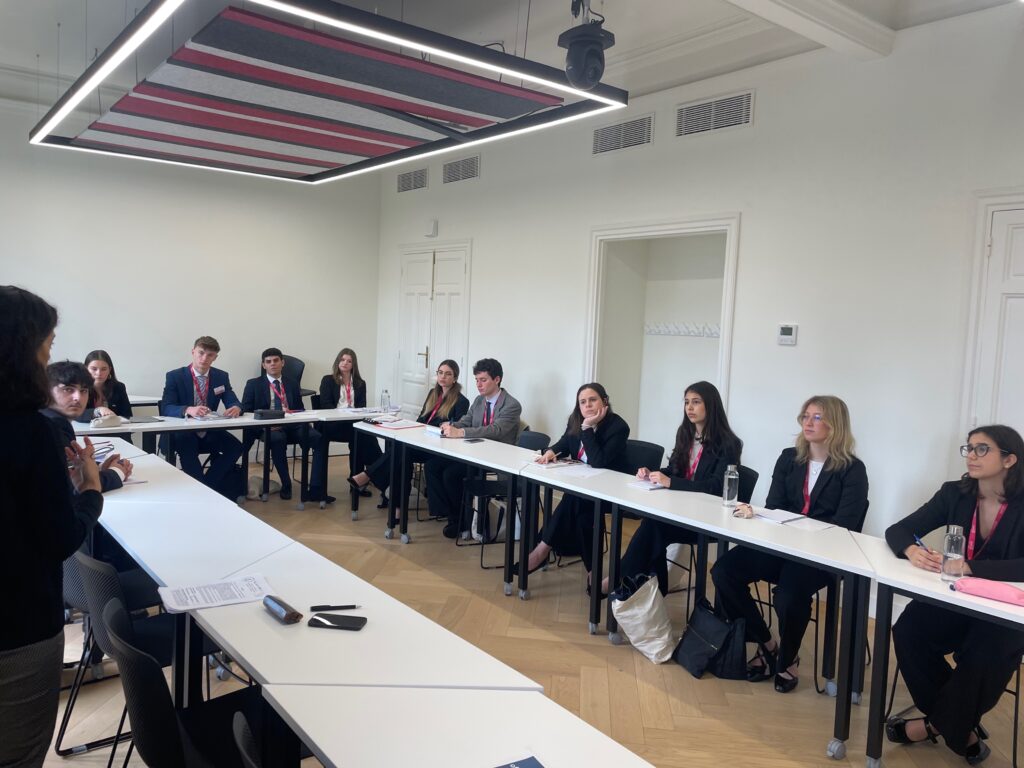
Model European Parliament | MEP MED Madrid 2025 | LIBE Debate
EMPL
This is precisely the problem that the EMPL committee is addressing in this year’s MEP session: the loss of authenticity due to locals leaving certain areas. Culture and authenticity deeply rooted in a city or village are being displaced by rising rent prices.
The reason apartment prices are so high is the high demand for places where tourists can stay during their holidays, creating a market for large businesses to profit from. The term for these apartments, such as those used on Airbnb, is STRs (Short-term rentals). Due to the large number of STRs, there are fewer places available for residents to live on a long-term basis.
Tourism is a significant contributor to a country’s Gross Domestic Product (GDP) and national income. All countries benefit economically from tourism, but those most popular during holidays, such as Croatia, Greece, and Portugal, profit the most. Our host country for this MEP EuroMed conference, Spain, derives 14.5% of its GDP from tourism. Some countries rely heavily on tourism as an income source, such as island nations like the Maldives. In Europe, Croatia leads in tourist income, contributing 25.8% of its GDP in 2023.
EU member states have jurisdiction over property ownership and housing policies, making it challenging for the European Union to directly intervene. However, they make efforts to assist through programs like InvestEU, which aims to bridge investment gaps in projects such as affordable housing and infrastructure updates.
The committee faces the challenge of ensuring long-term residents have affordable housing, protecting these popular spots from losing their authenticity, while also benefiting from tourism.
Committee EMPL started their Saturday with a workshop which helped them with speeching. Learning about speech structures, voice projections and stance while speaking. After they got to know everything they needed to deliver the perfect speech, the committee started with the committee meetings with the help of a Schiller University guest consultant. He helped the committee members with their questions and concerns about mass tourism, but one topic stood out where the committee discussed about a lot: Cultural loss.
What exactly do we mean by the term cultural loss?
Think of a city with ancient buildings and shops, but also local people who lived in the city for a very long time. When these things leave the city unwillingly, you lose a part of the culture of the city. Which results in cultural loss.
But what does affect a city and result in cultural loss?
In the resolution, the committee tries to tackle the problem of Short-term rentals, such as offered through sites like Airbnb and Booking. Instead of staying in hotels, many tourists now rent apartments for days or weeks. While this is convenient for the travelers, it creates a challenge for local people to seek housing.
As property owners start to realize that they can make more money renting their apartments to tourists, who are willing to pay higher prices, they stop renting out to local families. Some cities are almost filled with these Short-term rentals, which affects complete neighborhoods that once had local families and businesses, now turned into holiday rental paradises.
Tourists don’t know the city as well as locals, so they seek for trendy and popular places to eat food or buy clothes. In contrast to the local population who know local shops and restaurants. Because the share of tourists in the population increases, traditional family run business will less likely make profit and change into tourist-focused shops. This slowly erases the unique character of the place.
Imagine living in an apartment building where every few days, new, loud guests arrive for their holiday. Constant noise pollution, parties and suitcase-wheeling strangers can disturb local residents. Over time, the residents may choose to move away because of this, which results in a further loss of the community.
Many cities have their own customs, festivals and ways of life. But when tourism takes over the city, these traditions can become more some sort of “performances” rather than authentic experiences. Locals might change their customs to tourist’ expectations, which can water down the real meaning behind them.
Travel is a wonderful way to learn more about the world, but it should be done with care. By understanding how short-term rentals and overtourism can harm local communities, we can make better choices. That way, we can help to protect the cultures and places we love to visit, for both locals and future travelers
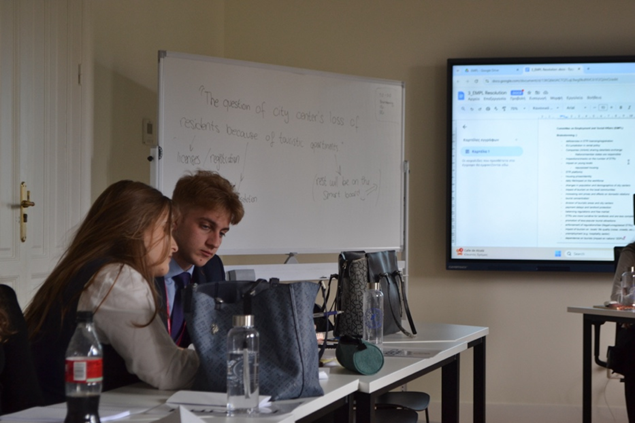
Model European Parliament | MEP MED Madrid 2025 | EMPL
AFCO
The European Union is thinking about growing again. In December 2023, Moldova and Georgia were granted candidate status, joining Ukraine and others on the path to EU membership. That brings the total number of candidate countries to nine. This could be exciting, but also brings important questions:
Should the EU expand again? If yes, how fast, and under what conditions?
Why Now?
The Russian invasion of Ukraine in 2022 changed a lot in Europe. Many EU citizens and leaders wanted to show solidarity with Ukraine and its neighbors. Supporting them with EU membership became a symbol of that support. That’s why Ukraine and Moldova became candidates in June 2022, and Georgia followed in 2023.
But while Ukraine and Georgia are fast-tracked, others have been waiting in line for years, raising concerns about fairness.
The Problem of Waiting
Some countries have been waiting to join the EU for more than 20 years. Imagine preparing for something for decades. That’s the reality for countries like Turkey or some Western Balkan states. So, when others are fast-tracked, it can feel unfair to those who have been waiting patiently.
What Does It Take to Join the EU?
Joining the EU is a long and complex process. First, a country must apply. Then the EU checks if it is ready. The main rules are called the Copenhagen Criteria: democracy, human rights, rule of law, and a working economy. After that, all EU countries must agree to start official talks. These talks take years and cover many topics. Once everything is agreed, there’s a final vote – and if all countries approve it, the new country can join.
Politics vs. Fairness
Some believe that if a country meets the Copenhagen Criteria, it should be allowed in—no exceptions. But others say we must also think about the political situation. For example, supporting Ukraine politically is currently seen as more important than whether they meet all the rules perfectly.
There’s also a practical concern: Can the EU still function well if it keeps getting bigger? Already, it’s hard to get 27 countries to agree on one thing. What happens with 30 or more?
What Do People Think?
Surveys show that many people in the EU support Ukraine joining – especially if it is truly ready. But opinions differ between countries. Some are more enthusiastic than others. Still, most agree that Ukraine is part of the “European family.”
What Will the AFCO Committee Do?
Their task is to look at all these sides – the practical, the political, and the emotional – and find answers. Enlargement sounds simple, but it’s actually full of complex challenges.
The AFCO committee must answer tough questions: Should fairness or politics take priority? And can the EU remain united as it grows? The decisions made here could shape the future of Europe.
Introduction
In the European Union (EU), fast-tracking refers to making the process of joining the EU quicker for some countries. Normally, countries must complete 9 steps before they become
EU members:
- You have to hand in an application
- The commission submits an Opinion on the application
- EU members decide to grant candidate status
- Member States agree to open the accession negotiations
- Negotiating framework
- During negotiations country prepares to implement EU laws and standards
- Commission gives its opinion on the readiness of the country
- Close the accession negotiations
- All EU Member States and candidate country sign and ratify an accession Treaty
Fast-tracking means allowing some of these steps to happen faster or at the same time.
The Copenhagen Criteria
To join the EU, a country must meet the Copenhagen Criteria, which were created in 1993. These are three main conditions:
- Political: The country must have stable institutions that guarantee democracy, the rule of law, human rights, and respect for minorities.
- Economic: It must have a working market economy and be able to cope with competition in the EU market.
- Legal: It must accept all EU laws and rules and be ready to apply them.
These criteria ensure that new member states are ready and able to work together with current EU countries. Normally, checking these criteria takes years.
Why Fast-Tracking Now?
There is more pressure to enlarge the EU quickly. Countries like Ukraine, Moldova, and Georgia want to join the EU fast, especially after the war in Ukraine and growing tensions in Eastern Europe. Some leaders believe fast-tracking can help protect these countries, support democracy, and show strong EU leadership.
Benefits of Fast-Tracking
- Security: New members can feel safer, especially if they are near conflict zones.
- Support for reforms: EU membership motivates countries to fight corruption and build better institutions.
- Economic growth: Trade and investment may increase for both new and old members. Which would bring more money into the EU.
- Geopolitical power: A larger EU can be stronger in global politics.
Challenges and Risks
- Incomplete reforms: Fast-tracked countries may not fully meet the Copenhagen Criteria.
- Fairness: Other candidates, like North Macedonia or Albania, have waited for many years.
- EU capacity: The EU must be ready to take in new members – financially and politically.
- Public opinion: Some citizens in current EU countries may worry about migration, jobs, or rising costs.
- Long-term problems: Weak institutions or corruption in new members could hurt the whole EU.
Example: Ukraine
Ukraine applied for EU membership in 2022 and received candidate status quickly. Many EU members want to fast-track Ukraine due to the war and its symbolic importance. But Ukraine still needs to reform its legal system, reduce corruption, and meet EU standards.
How to Fast-Track Responsibly
- Keep key Copenhagen Criteria, especially democracy and rule of law
- Allow step-by-step membership (for example, access to funding or trade before full membership)
- Give strong support to help candidates meet the rules
- Be clear and fair with all countries
Conclusion
Fast-tracking EU enlargement can help in difficult times, but it must be done carefully. The Copenhagen Criteria should still guide the process. Fast decisions should not create future problems. A balance between speed and responsibility is the best way forward.
Press Videos
EMPL Interview by Luuk Plum
FEMM Interview by Ellinoora Anttila
AFET Interview by Chaehyeon Kim
Interview by Ellinoora Anttila and Louis Piech
Downloads
Fact Files
Preparation Modules